Monthly Archives: January 2019

5 Signs of a High Quality Logo Designer

Logo Designer

Questions and research can be useful to a designer to understand the client’s demands. After that he/she needs to create& develop the concept or idea.

1a. .Construction of Creative Design Brief. The initial step is to form a creative design brief as far as the professional designing project is concerned. One can understand a client’s needs through different questions. The graphic designing process can be started for that understanding the comfort zone of the client from the designer’s point of view is very crucial. It can be a telephonic conversation, he/she can meet the client with an online designing questionnaire or in this 21st-century email is also one convenient option.
Finally, design brief’s purpose is o help the designer so that he can have a brief understanding of the project more he/she will know more they can have a conversation through initial design concepts.

1b. Define a creative design brief? A creative designing brief is a document used for designing or developing a project and formation done through consultation which takes place between the client and the designer.

c. What type of questions will a designer ask his/her clients? The logo & designing questionnaire is divided into several critical areas.

i. What is the purpose of the client’s business? What kind of problem he/she solves for the customers?

ii. Description of the owner’s perfect client?

iii. If the owner has an existing client then why that is not working for him?

2. Research and Discovery Phase

Once the questionnaire is answered, the designer will go through and construct a solid base to move forward.

2a. Discovery of the client The designer can discover the client when he/she will understand the issues so that the best possible solution can be provided to him.

2b. Discovery of an industry? The designer monitors what their competitor is doing, and when they are doing well, then the designer considers them to be correct.

2c. Primary Research- Qualitative and Quantitative Research As far as comprehensive designing process is concerned one needs to engross into the research levels of the brand through qualitative and quantitative brands. Primarily explorative research comes under qualitative research. The purpose of the quantitative analysis is to examine or evaluate the attitude, opinion or behavior.

2d. Part Two -Secondary Research The designer will go deep into the existing brand identity of the client. The Logo design process steps.

3.0 Logo Sketches and Brainstorming A sketch is the starting point of every excellent logo design.

3.1 Mood boards And Reference imagery are collected from the beginning point occasionally the designer needs to assist the client, and he will be sent the images; as a result, the look will be drawn.

3.2 Quick sketches And Basic Forms Starting from the first sketch in the notebook there are chances of visual iconography.

3.3 Redefining The Logo with Gridlines. There are chances of the formation of grid and lines which are drawn to balance.

4.Conceptualization. One can define conceptualization as “the forming of a concept.” The concept is given a new viewpoint when it can be seen on the screen.

4.1 Creating digital versions From the Sketchbook. The logo designer is working either with a scanner; the primary forms will be digitally formed.

4.2 Exploration In Monotone When colors are used in any design before that logos consideration must be taken in monotone black and white shades as well.

4.3 Creating a logotype. Once the designer has a rough idea as far as working for the logo mark is concerned the designer will start thing about the representation of the logo through the logotype.

4.4 Pulling it all together. When the designer has ample typefaces which are perfectly all right as far as the brand is concerned. Then the designer will explore how those typefaces look side by side with the symbols which have a logo mark, and those are created before.

5. Refinement and Client Presentation The designer will showcase the look of the logo on different background colors at various scales. This is helpful for the client so that they can view as far as set in the real world is concerned.

5.1 Color Scheme Exploration The designer presents the alternate color schemes to the client again to have a look as far as the concept’s efficiency is concerned.

5.2 Future Proof Adaptability. The designer will have faith that the logo should be timeless.

5.3 Creation Of Digital Mockups The designer would show the look of a concept or idea in practical life if the client wanted to use it on an outfit.

5.4 Presentation of Logo Design to A client. The logo design presentation at the base level is delivered to a secure PDF format which will allow the client to visualize on screen and after that he/she can take a print out. Each idea has its PDF which consists 5-10+ pages. It is dependent as far as the scope of the project is concerned.
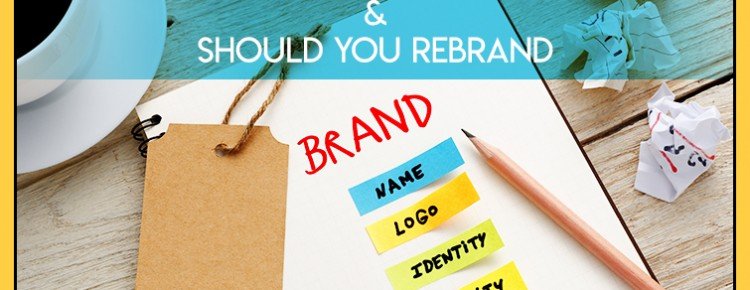
What Does Rebrand Mean & Should You Rebrand?

Rebrand

Reasons Behind Rebranding a Business:

There are several reasons why a business may need to rebrand. One vital factor is to find a more prominent way to connect with the customers. In some cases, the industry thinks that the existing brand images that they are currently using are not good enough to communicate to their potential customers. Therefore, they go for a rebranding to come with a new approach. As mentioned, rebranding includes the redesign of a business logo, website, banners, advertising materials. Companies planning to rebrand their business appearance should first conduct detailed research on the current market and audience behavior.

Types of Rebranding:

There are mainly two types of rebranding that businesses go for – proactive rebranding and other one is reactive rebranding. In dynamic rebranding, companies try to find the opportunities to grow and innovate their current business appearance according to the same. This type of rebranding enables businesses to reconnect with their potential users.
On the other hand, reactive rebranding takes place when the existing brand needs to be changed or discontinued for some reasons. Some of the potential reasons why a business may need this type of rebranding are the consequences of legal issues, negative publicity, bankruptcy, business collaboration.

Should You Rebrand?

In today’s competitive industry where your brand’s visual identity is an essential element that customers use to make buying decisions, rebranding is a bit risky. This is especially risky when you have an already established brand name and reputation in the market. Companies with an established brand identity have an existing client base and are earning money because people know and trust their brand. In this scenario, it is hazardous to rebrand as there is a question whether the customers will still identify your visual brand with the existing reliable reputation. It is true that satisfied customers always want to stick to a particular brand and under any circumstances, you should not confuse them by rebranding your business.
However, when rebranding, your goal should be to give your business a new look that customers can easily recognize rather than visualizing an entirely different concept. A rebrand should always focus on redefining your company’s vision and portray the core business message to new and old customers in an easily understandable manner.

Rebranding is a delicate art that needs to be treated professionally so that it is not going to do any harm to your existing reputation and business identity. Lots of time and research needs to be implemented successfully to come up with a good rebranding strategy.

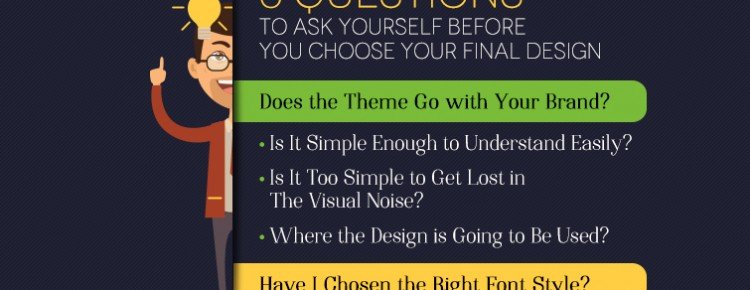
5 Questions To Ask Yourself Before You Choose Your Final Design

Final Design

Use the five questions below to help you take a significant decision in choosing the final design concept.

Does the Theme Go with Your Brand? The first question you need to ask yourself when choosing the final design is whether the theme goes with your brand or business. It would be best if you determined whether the final design that you have chosen is suitable enough to represent your business message. The designs that you have used in your company logo or website are the first things that a potential customer first notices and if you make a mistake in choosing the underlying theme of the design, it might become harmful for the representation of your brand.

Is It Simple Enough to Understand Easily? In some cases, the designers include too many elements in a particular design to make it overly crowded. It would be best if you created an attractive design to grab the attention of your customers, but at the same time, you should provide a clear, easy to understand information through the design. All elements used in it should be simple and come in a logical order so that even the individuals with little or no technical knowledge can understand your concept. For example, an enticing headline with a short sub-headline is excellent for a banner ad, and the images that you choose for the design should be simple enough to compliment the headlines.

Is It Too Simple to Get Lost in The Visual Noise? This is vital to decide how much simple is too simple. It would be best if you chose a simple design, but that doesn’t mean you have to design a straightforward and dull looking design that is not get noticed in the crowd other beautifully designed concepts. This is especially important when your business has many competitors, and you need to create a stunning looking design to compete with them.

Where is the Design Going to Be Used? Another essential thing to ask yourself before choosing the final design is where the design will be used. Before you select the final design, you must consider the place where the particular design will be used. For example, if you are planning to choose a logo design, you must consider the place/website whether the logo will be implemented. Also, it is essential to know the purpose for which the design will be used. For example, you cannot design a formal looking front page of an eBook, which is going to be meant for a semi-formal audience.

Have I Chosen the Right Font Style? When it comes the aesthetic of graphic design, the typography and the font style you choose for the same takes a vital role in determining the appearance. You should ask yourself whether the font style you have chosen fit in this type of project. Font style and typography is not just an artistic element that determines the visual appearance of the design, but it serves a lot in expressing the real purpose of the design as well.

Is Investing in Logo Design Worth It? Here Are 8 Reasons Why It Is.

Logo Design

As a design agency, we often get asked about logo design and whether it’s worth paying more for it… and the short and simple answer is yes.We know that you’re thinking, of course, we’re going to say that – but if you heed our words when we say: Some things in life are worth the expense.

Here are eight convincing reasons why good logo design is worth the investment for your business:

1. The logo is your first impression: Your logo design is essentially the visual component of your brand’s identity. When done well, a prospective customer should be able to recall your business simply by looking at your logo design.

2. It gains trust: Your brand plays a large part in appealing to your specific customer demographic. You want your logo to look professional.People determine whether to trust you is through your logo, and then once they are impressed, they continue reading your offer, which is why that tiny icon we call logo is so essential.

3. Demonstrates Professionalism: If you opt for cheap graphic design, this will be immediately apparent to your customers and will look unfavorable on your business. Even if you use cheap graphic design when starting with the intention of investing more in design as your budget grows, it will be extremely difficult to overcome the initial impression that your company can’t afford quality graphic design.

4. It stays with you for a long time: Brand once, brand strong. It might cost you a little more upfront to iron out all the details and have the work done by professionals but it is easier on your company, your customer, and your checkbook, than re-branding every year or two. Changing identity means you have to waste effort to re-educate your customers and your target audience. It’s hitting the reset button for all your company’s awareness, so why not just invest in a logo that’s going to stick around?

5. Improves Communication: Our investment in graphic design should extend beyond your logo. The use of visuals can help to increase your audience’s comprehension of your message greatly. It should be noted that in a world where the attention span of the consumer is increasingly becoming shorter, the use of good graphic design can help to captivate and hold your audience’s attention, therefore helping to get your message across.

6. Results based on Research: You might already have great ideas for your branding, but investing in a professional logo design will get your results based on research. A logo is more than just a graphics; it has to be designed with several elements in mind: mission, values, target market and competition, to mention a few. A professional designer will conduct the necessary research and steps while working close to you to get to the best logo design. Plus, it is always a good idea to brainstorm together.

7. Building the Loyalty: Every industry is a 24×7 war zone. The main way to defend your clientele is customer service.However, it’s expensive to care for all your customers all the time; you will want them to convince themselves to stick around. That’s loyalty.It’s difficult to maintain it if your competitors are always cooler than you. Remember, your logo goes on all marketing materials. If you put wrap a Lamborghini with some lame stickers, you ruin the car. It doesn’t help to make your stickers look cooler.

8. You are running a business, not a hobby: If you are not selling yourself as a brand, you should always consider the market.The logo ensures easy acceptance and prompt sales of the new items.Pay attention to the details and keep your dream alive by having an aesthetic that is clean and says “We have our act together. We are offering something that you can count on being awesome!”

A word to the wise- never buy cheap make-up, or pinch pennies on your logo. Your business is your passion, your brainchild! When it comes to building a brand for your business, Logo design needs to be a part of the discussion.

Should You Hire A Graphic Designer Before You Start Your Business? Here are 6 Reasons Why!

Graphic Designer

Some people wouldn’t dream of starting a project without professional help and others can’t justify the expense. Where you fall in that debate is ultimately up to you. But here’s a thing: People are more likely to remember a brand from its logo than its name. The most iconic brands and their logos are quite frankly inseparable. Anyone will recognize brands like Apple, Thumbs-Up, and McDonald’s from their logo alone. Despite the fact that all three of them have undergone changes (to varying degrees), the logos retain the familiarity and recall value. It is possible to create such memorable and iconic logos for your own business if you hire the right logo designer.

Rest assured, we’re not going to leave you hanging. In order to help you best decide, we’ve compiled a list of reasons to check before committing to working with a pro. Read them below and think about them carefully.

 
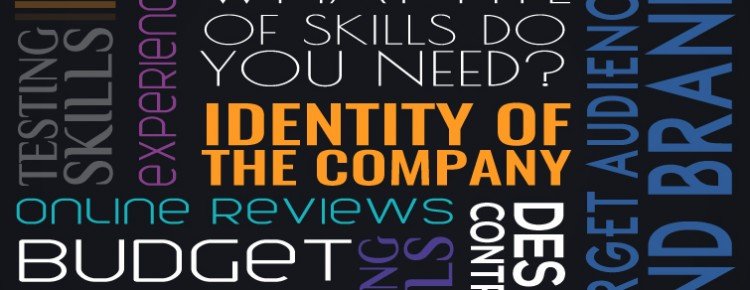
1. The identity of the company
The first thing that you need to be clear about is your goals. You are new in business and it is obvious you want to get more popular but what you need to do? Do you need a graphic designer for redesigning your whole website or one for just creating a company logo design? By defining your goals, you will make it easy for yourself to find the right fit.

2. Budget
In today’s competitive era, there is no scarcity of talented graphic designers. However, you will only get what you pay for. The higher the complexity or requirement, the higher the budget should be. You should also consider agencies that provide a complete end-to-end solution. They are more experienced in handling projects, and would always give you a breakdown before starting your work.


3. What type of skills do you need?
Graphic design is a significant vertical. It also includes experts with specific design skills. You should be clear about the particular skills that you are looking for. If you are not sure, always ask the graphic designer upfront so that everyone knows what to expect. Your requirement determines what type of skills you are looking for. To ensure that get the right talent for your project, be transparent and upfront.

4. What services are you looking for?
You need to consider what you would like for the project itself. As you know, graphic design is a lot more than scribble – doodle and playing with fonts. You have to balance aesthetics and function while also considering how ideas/concepts will come together as a whole. It is always a good idea to interview a few potential candidates before making a final decision. You can set up a video chat at a preferred time by yourself and the candidate and try and make yourself, your brand, your style familiar with the designer.

5. Candidate’s POA for project execution
Information is indispensable. That’s why you should be clear from the start in sharing information. To do so, you also need to understand what the graphic designer needs, his/her plan of action. This should stand true vice-versa as well. The process of exchange information back and forth should be carried through the project. If your brand has a past history, case studies of the same should be well kept and processed. By doing so, you are moving your project to success and ensuring that it gets completed within the deadline.

6. Target audience and brand
To ensure that the work is done according to what you are looking for, explain the brand identity and target audience. Each company or business is different, and that’s where brand values and customer personas come in. If the designer doesn’t know what your brand is trying to achieve, you will most probably get something that is not intended. If you have defined a persona for your audience, don’t forget to share it with the creative. It will help them better understand the target audience.


As you can see hiring a graphic designer is no small task. It requires a sensible approach, and you need to be careful in all the steps that you take. Chances of hiring a wrong person are high if the time is cut short. It is your responsibility, as an employer to build an engaging relationship with them. Always keep in mind that your business is all about the people you work with. All aspects of your brand work together as a unit, therefore, hiring a designer or agency before you start your business is crucial and will help you start off as a hit!